Source Foldable Portable Poker Table for Home, Events, and Clubs
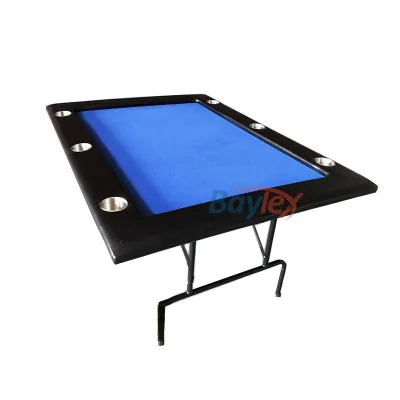
Compare 30 foldable portable poker table options from verified Chinese manufacturers. Buyers can evaluate specifications, customization, and pricing for conventional game and entertainment use cases. These units feature wood construction, various dimensions, and customizable designs suitable for intermediate difficulty levels and ages 14 and up.
Key considerations
Products List




Comprehensive Sourcing Guide
Foldable Portable Poker Table Sourcing Guide
Sourcing foldable portable poker tables requires a careful balance between structural integrity for gameplay and compactness for storage. Buyers must distinguish between dedicated poker tables and multi-purpose gambling surfaces, as the latter often lack the specific felt textures and chip trays essential for serious card games. The observed product data indicates a diverse market ranging from simple card game accessories to substantial wooden furniture pieces, necessitating clear definition of the end-use environment before engaging suppliers.
Procurement teams should prioritize suppliers who offer customization options for felt color and table dimensions, as these factors directly impact player comfort and brand alignment. The presence of models with specific model numbers like SUS-7232 and ST-TB06 suggests a mature manufacturing ecosystem in Guangdong, China. However, verifying the actual portability features, such as hinge quality and folding mechanisms, is critical to ensure the product meets the "foldable" and "portable" claims made in the listing titles.
Product Scope and Observed Listing Signals
The current market landscape for foldable poker tables includes a wide variety of configurations, from lightweight card game sets to heavy-duty wooden tables. Observed listings reveal products with varying dimensions, such as 102x101x12cm and 121x121x72cm, indicating that buyers must carefully assess the footprint requirements for their intended venues. The distinction between "Card Game" types and "Gambling Tables" is significant, as the latter often feature specialized felt colors like blue, red, green, or black, which are standard in professional casino environments.
Buyers should note that some products are marketed with specific model identifiers, such as SUM-7236-2P or SUS-4848HV, which may correspond to different material compositions or structural designs. The availability of customization for carton design and product patterns allows for branding opportunities, but it also introduces complexity in the ordering process. Understanding whether the product is intended for conventional home use or commercial entertainment venues will help narrow down the appropriate product scope and avoid purchasing oversized or undersized units.
Technical Specifications to Verify
Technical verification must begin with the physical dimensions and weight of the folded and unfolded states. Buyers should request detailed packing lists that specify the outer carton dimensions, such as 1029415cm or 1307014cm, to calculate shipping volume and storage requirements accurately. The material composition, often wood for higher-end models, must be confirmed to ensure durability and stability during gameplay, as lightweight alternatives may wobble or fail under the weight of chips and cards.
The folding mechanism is a critical technical feature that determines the table's portability and ease of setup. Suppliers should provide clear diagrams or videos demonstrating the folding process, especially for models described as having a "Corner" style or "Folded" feature. Additionally, the surface material, typically felt, should be inspected for quality and attachment method, as loose felt can degrade quickly with frequent folding and unfolding. Verifying the net and gross weights, such as 40.5/44.4 Kg for certain models, is essential for logistics planning and handling safety.
Compliance and Safety Documentation
Safety compliance is paramount, particularly for tables intended for use in public or commercial entertainment venues. Buyers must ensure that the wooden structures meet relevant safety standards for stability and load-bearing capacity to prevent tipping or collapse during active gameplay. Documentation should include test reports or certifications that verify the structural integrity of the folding joints and the non-toxic nature of the materials used, especially if the tables are marketed for younger audiences or family use.
Environmental and chemical safety standards must also be addressed, particularly regarding the felt and any adhesives used in construction. Buyers should request Material Safety Data Sheets (MSDS) for all components to ensure compliance with international regulations on volatile organic compounds (VOCs) and heavy metals. For products originating from China, verifying adherence to local manufacturing standards and any export-specific requirements is necessary to avoid customs delays or rejections in the destination market.
Cost Drivers and Commercial Terms
Cost drivers for foldable poker tables include the material quality, customization options, and order volume. Higher-grade wood and premium felt materials will increase the unit price, while extensive customization of colors and logos adds to the manufacturing complexity. The observed minimum order quantities (MOQ) range from 1 to 500 pieces, allowing for flexibility in initial testing orders, but larger volumes may secure better pricing and more favorable commercial terms.
Lead times are a significant commercial factor, with observed delivery times ranging from 30 to 35 days. Buyers must account for these lead times in their inventory planning and consider the impact of shipping methods on the total landed cost. Payment terms should be negotiated to mitigate risk, especially for customized orders, and buyers should clarify whether the quoted prices include packaging materials and any necessary assembly hardware.
Supplier Qualification and Quality Control
Supplier qualification should focus on manufacturers with proven experience in producing folding furniture and gaming accessories. Buyers should verify the supplier's production capacity and quality control processes, particularly for the folding mechanisms and surface finishes. Requesting samples before placing bulk orders is essential to assess the build quality, ease of folding, and overall durability of the table.
Quality control checks should include a thorough inspection of the packaging to ensure that the tables are protected during transit. The observed packing methods, such as carton or box packaging, must be robust enough to prevent damage to the folding joints and felt surface. Buyers should establish clear acceptance criteria for defects, such as loose fittings, uneven felt, or structural weaknesses, and include these in the purchase agreement to ensure consistent product quality.
Long-Term Procurement Checks
Long-term procurement success depends on establishing a reliable supply chain that can scale with demand. Buyers should monitor supplier performance metrics, including on-time delivery rates and defect rates, to identify potential issues early. Building a relationship with a single supplier or a small group of qualified vendors can streamline the ordering process and ensure consistency in product quality over time.
Regular reviews of product specifications and market trends are necessary to stay competitive. As new materials or designs emerge, buyers should be open to upgrading their product offerings to meet evolving customer preferences. Additionally, maintaining open communication with suppliers regarding future orders and potential customization needs will help in planning production schedules and managing inventory levels effectively.
FAQs
Can I customize the felt color and carton design?
Yes, customization is available for the felt color and carton design. Buyers can select from blue, red, green, or black felt options. The carton design, product color, and patterns are also customizable to meet specific branding needs. This flexibility allows for tailored packaging and aesthetic preferences for different market segments.
What is the minimum order quantity for these tables?
The minimum order quantity varies by model. Some models require an MOQ of 50 pieces, while others may require 100 pieces. The observed MOQ range across listings is 1 to 500 units. Buyers should check the specific model requirements to determine the exact minimum order needed for their procurement plan.
How long is the lead time for production?
The lead time for production is typically 30 days for standard orders. Some specific models may have a delivery time of 35 days. Buyers should account for these timelines when planning inventory. The lead time starts after order confirmation and customization details are finalized with the supplier.
What are the standard dimensions for the poker tables?
Standard dimensions vary by model. One common size is 108*208*72cm, while another is 121*121*72cm. Packaging dimensions also differ, such as 110*17*72cm or 62*123*10cm. Buyers should verify the specific model dimensions to ensure they fit their intended space and shipping requirements.
Are these tables suitable for intermediate level users?
Yes, these tables are designed for intermediate level users. They are suitable for ages 14 and up. The tables support conventional games and entertainment purposes. The manual operation mode ensures ease of use for typical gaming scenarios without requiring complex setup or technical knowledge.
What is the origin of these poker tables?
The origin of these poker tables is China, specifically from Guangdong province. This region is known for manufacturing gaming equipment. Buyers should consider shipping logistics from this location. The products are exported globally from this manufacturing hub, ensuring consistent quality and supply chain efficiency.